
Midnight Oak: A Custom DJ Booth for a Black-and-White Home Studio
Some rooms do not start out badly. They just slowly become a collection of compromises.
That was the case here.
The gear itself deserved better than the setup around it. Wires and cords were hanging loose around the room. The turntable and mixer were sitting on an IKEA shelf that was never really meant to serve as the foundation for a serious audio setup. It held the equipment, technically, but it did not support the experience of using it. The room looked messy, the staging felt temporary, and the whole setup lacked the kind of structure that makes a space feel settled.
There was also a more important problem hiding underneath the visual one. The turntable needle was jumping and skipping from speaker vibration. That meant the issue was not just about appearance. It was about stability.
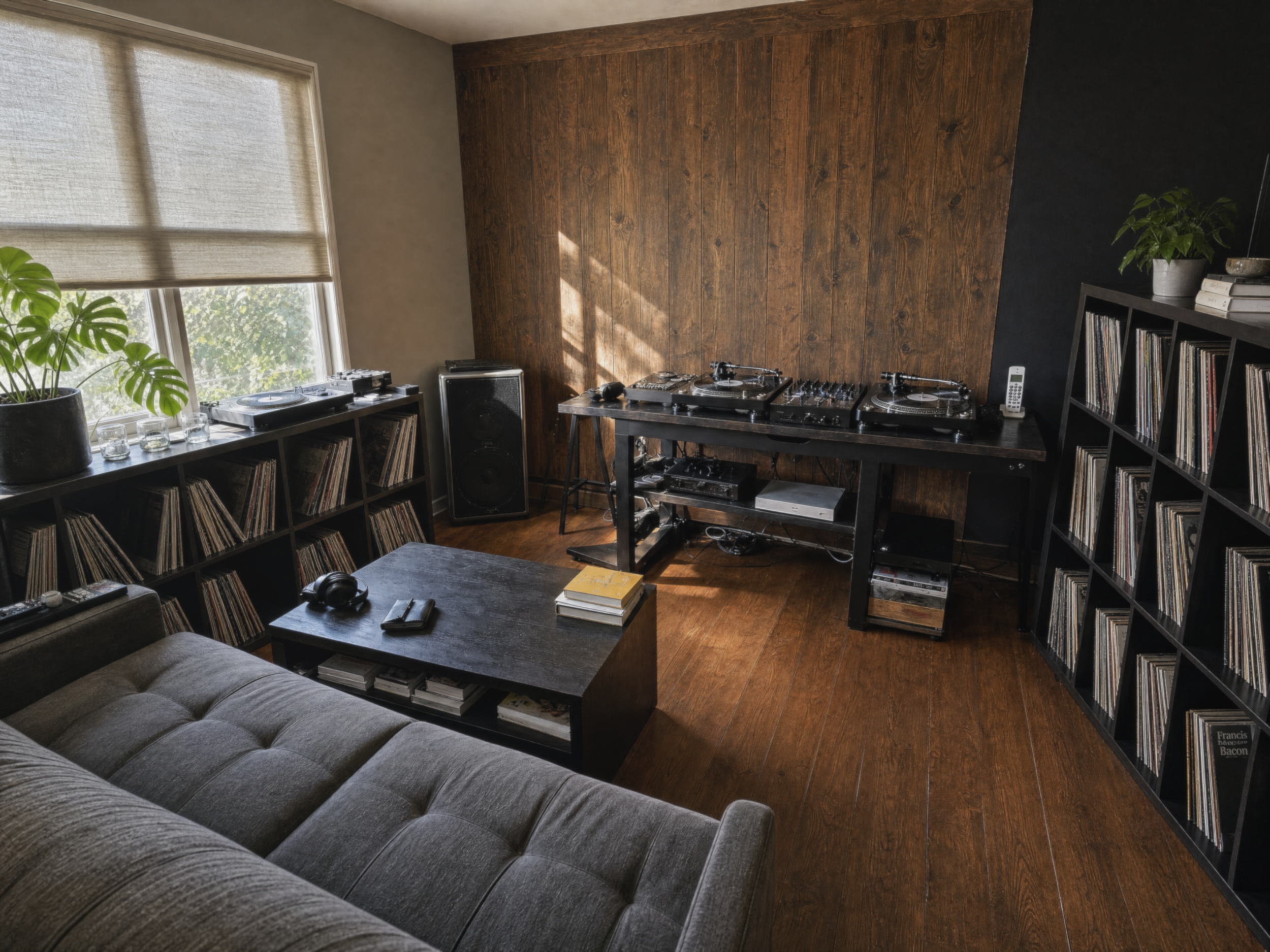
A lot of music rooms end up in this category. Good equipment gets placed wherever it can fit. Storage becomes improvised. Cable management gets pushed aside for later. Furniture gets chosen because it is available, not because it is actually right for the job. Over time, the room starts to feel less like a complete environment and more like a temporary arrangement that never got fully resolved.
That is where custom work starts to matter.
A custom DJ booth is not only about making a room look better. It is about giving the setup a real foundation. In this case, the goal was to replace a weak, unstable staging piece with something solid, intentional, and built for the way the room was actually being used. The booth needed to provide more stability, better organization, and a cleaner visual presence without losing the personality of the space.
This project became Midnight Oak.
The name fit the room. The space already had a darker mood and a strong visual identity, so the new booth had to bring warmth and structure without feeling out of place. It needed enough presence to anchor the setup, but it also needed to feel natural in the room rather than oversized or distracting. The point was not to overwhelm the equipment. The point was to give the entire setup a proper home.
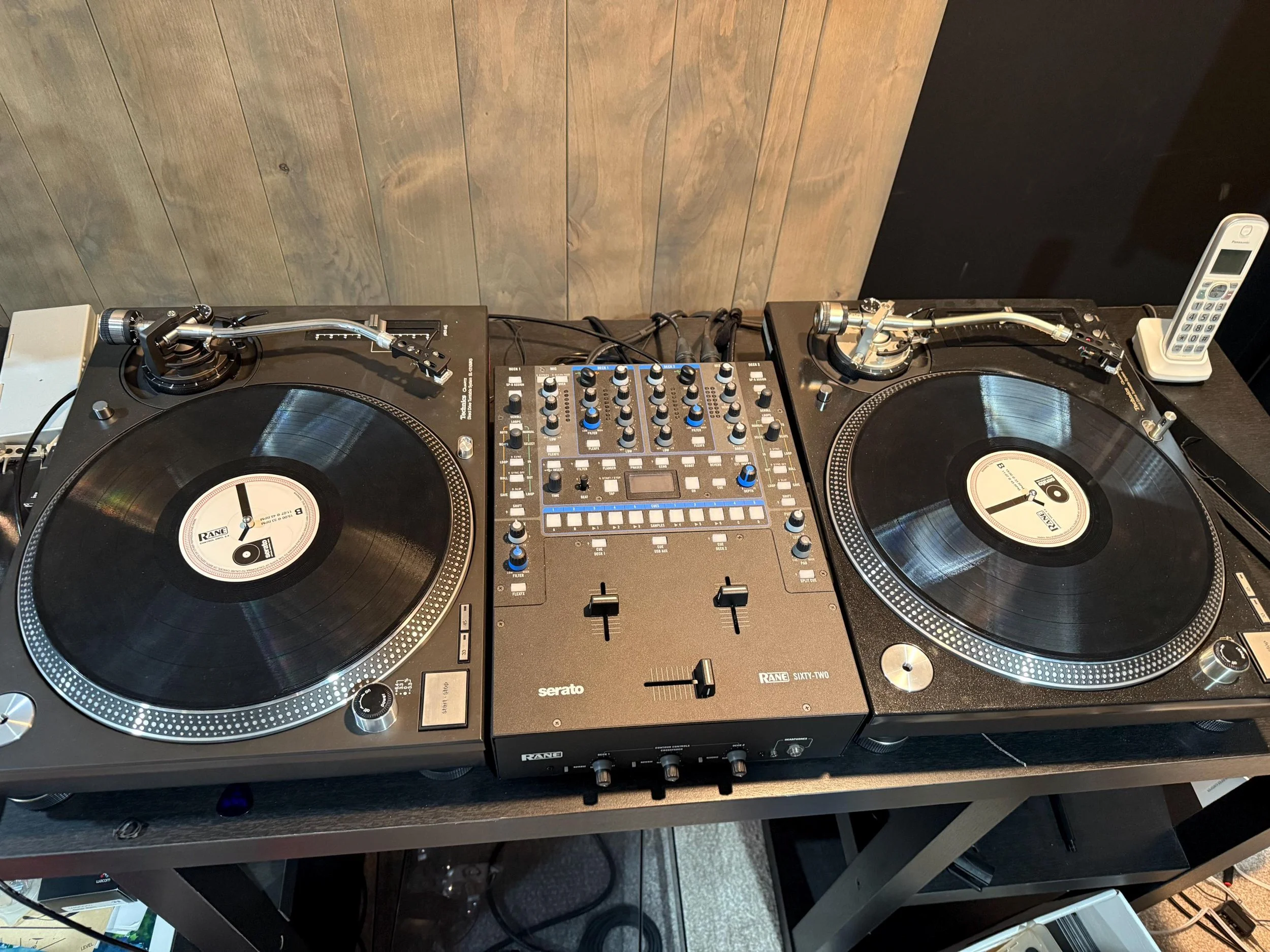
The most important shift was functional. Turntables are sensitive. When the furniture underneath them is not solid enough, the problem shows up immediately in the experience. In this room, speaker vibration was affecting playback and making the setup frustrating to use. A sturdier base was not a luxury. It was part of the solution.
That is one of the big differences between generic furniture and a piece designed for a specific purpose. Generic furniture asks the room and the equipment to adapt. A custom booth works the other way around. It can be built around the footprint of the gear, the way the setup is actually used, the storage that is really needed, and the visual tone of the room it belongs in.
For Midnight Oak, that meant creating a booth with a stronger, more reliable base, better overall proportions, and a more intentional relationship to the rest of the space. It also meant making room for cleaner cable management, so the setup no longer looked like it was fighting against itself. When cables are controlled and equipment has a proper place, the room feels calmer immediately. Not because it is trying harder to look good, but because it finally makes sense.
That kind of organization changes more than people expect. A messy setup can make even good equipment feel unfinished. A stable, well-designed setup does the opposite. It gives the room clarity. It gives the eye a place to land. It makes the whole space feel more permanent, more deliberate, and more rewarding to spend time in.
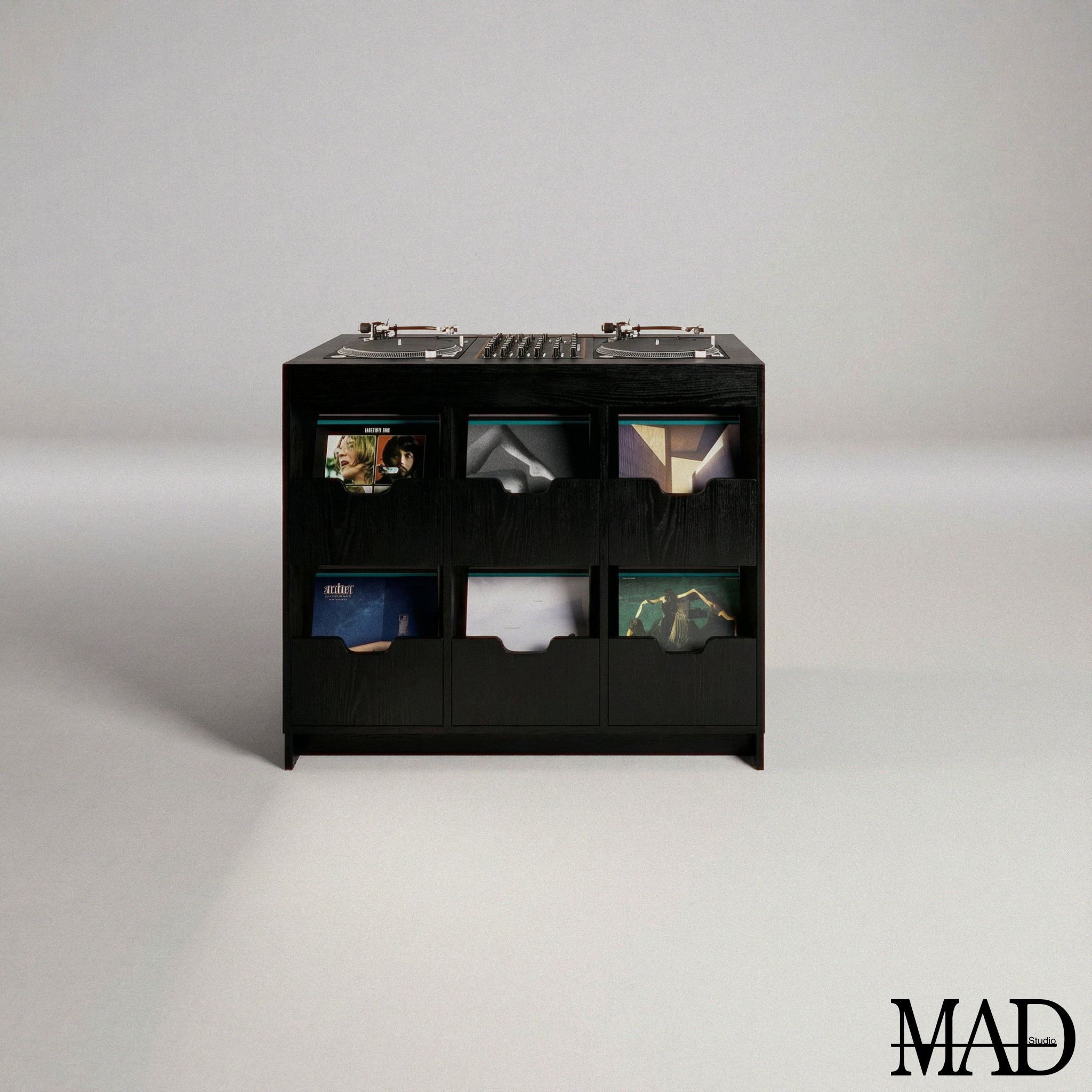
Before the piece was built, we created a render to help the client visualize how the booth would look in the room. That step made it easier to review the design, gather feedback, and refine the details before production began. It is an important part of the process because it helps us develop a piece that feels right for the client, fits the space properly, and supports how the setup will actually be used.
That design step matters because custom work is not just about building something from scratch. It is about shaping the right piece before the build begins. The render gives the client something concrete to react to. It creates a better conversation. It helps clarify proportion, presence, and overall direction early enough to improve the final result.
Visually, the booth helped the room in a different way as well. The previous setup looked improvised. Midnight Oak made it feel composed. The darker wood added depth and warmth while still fitting naturally into the black-and-white atmosphere of the room. Instead of looking like a temporary station for expensive gear, the setup now read as a real part of the interior.
That difference matters. In a room built around music, listening, and equipment, the furniture should not feel like an afterthought. It should contribute to the overall experience. It should help the room feel more intentional, not less. It should support the way the gear performs and the way the space feels.
Once the booth was in place, the change was immediate. The room felt more organized. The setup had the stability it had been missing. The cables no longer dragged the visual quality of the space down. What had looked messy now looked resolved.
That is often the real value of a custom piece. It does not just add something new to the room. It removes friction from the experience of using it. It solves problems that cheap or generic furniture was never designed to solve. And when it is done well, it makes the room feel more like the version it was always supposed to become.
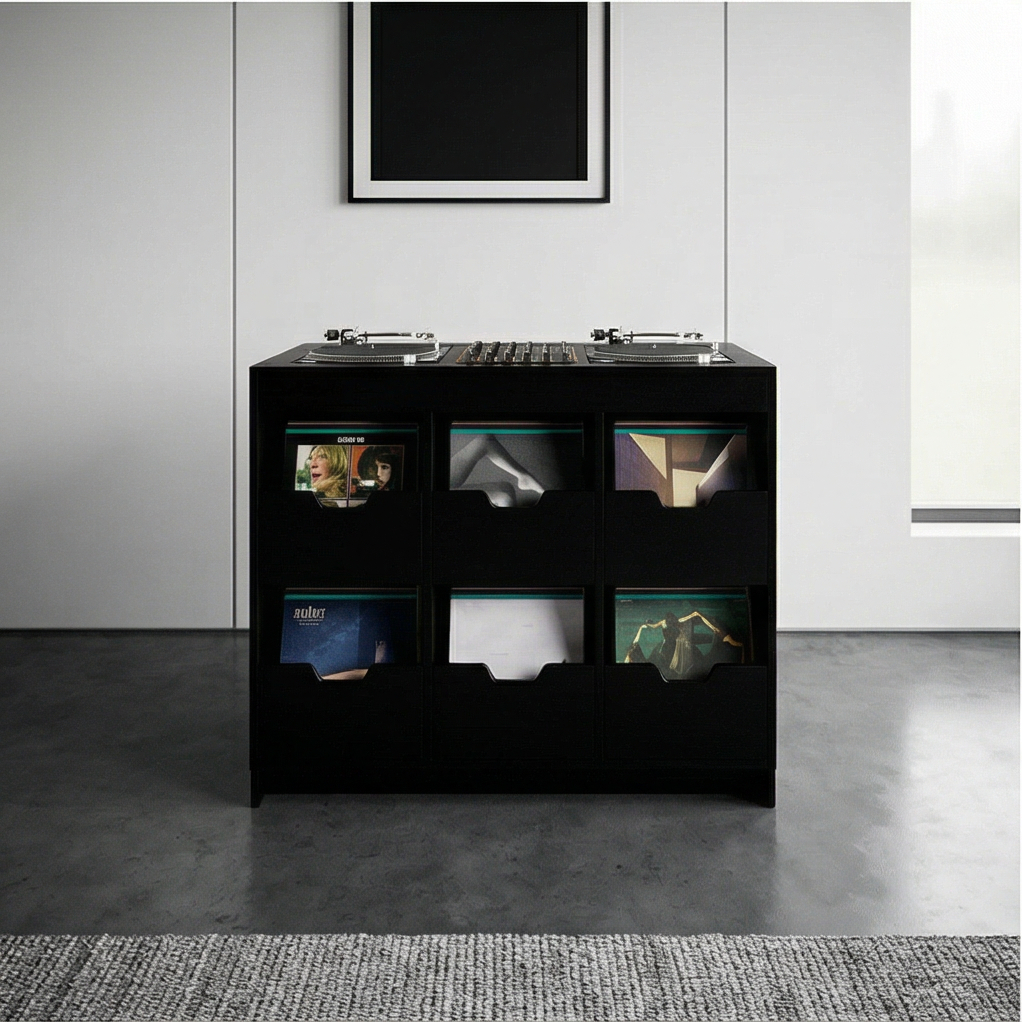
Midnight Oak was not about adding furniture for the sake of furniture. It was about replacing an unstable, messy setup with something that could truly support the equipment, improve the room, and make the whole space feel resolved.
The result was more than a better-looking DJ booth. It was a better foundation for the room itself.
If you are planning a custom DJ booth for a home studio, listening room, or music-focused interior, MAD Studio creates pieces designed around real use, real spaces, and the details that make a setup feel complete.